Event Management Software for Trade Shows and Expos
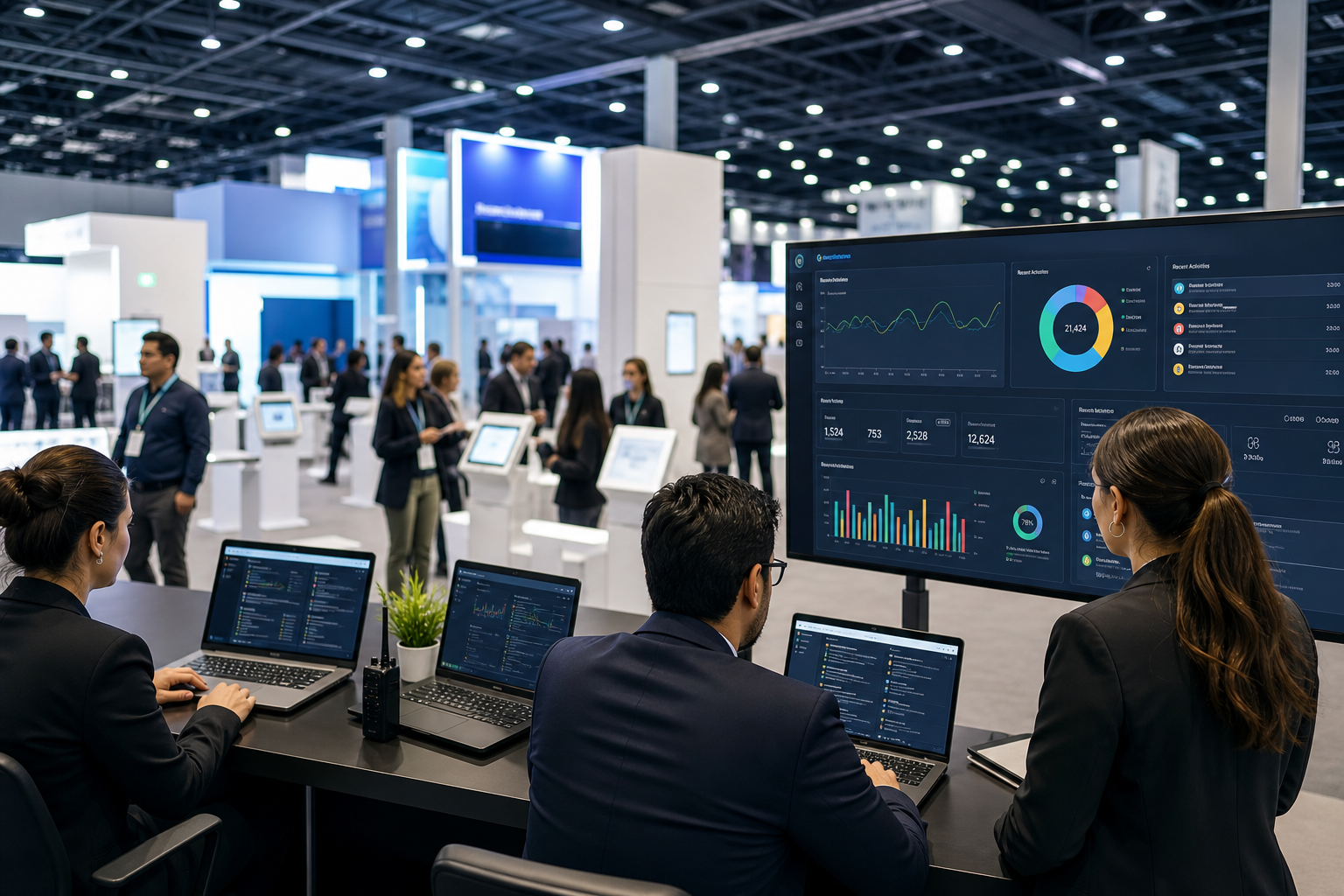
Trade shows and expos are among the most complex event formats to plan and execute. Unlike smaller meetings or simple registration-based events, they involve multiple stakeholder groups with competing priorities: organizers, exhibitors, sponsors, speakers, attendees, vendors, and venue teams. Managing exhibitor contracts, assigning booths, coordinating move-in schedules, handling attendee registration, supporting lead retrieval, and delivering fast check-in at scale can quickly overwhelm even experienced teams.
That is why event management software for trade shows has become essential. The right platform does far more than collect registrations. It acts as the operational backbone for exhibitor management, booth sales, attendee engagement, on-site logistics, lead capture, reporting, and post-event analysis. For professional event organizers, choosing the right technology can directly impact revenue, exhibitor satisfaction, attendee experience, and long-term event growth.
In this guide, we will break down what trade show organizers should look for in modern software, how to manage the moving parts of an expo more efficiently, and why integrated systems outperform disconnected tools. If you are comparing platforms, start with EventForge’s complete guide to event management software and explore key capabilities on the features page.
Why trade shows and expos need specialized event management software
Trade shows are operationally different from conferences, seminars, and corporate meetings. They have more inventory to manage, more revenue streams to track, and more pressure on on-site performance. A standard registration tool may be enough for a simple event, but expos demand a system designed to support scale and complexity.
Here are a few reasons specialized trade show event management software matters:
- Exhibitor management is ongoing and multi-step. It includes applications, approvals, contracts, payments, booth selection, logistics, and communication.
- Booth inventory changes constantly. Organizers need real-time visibility into available, reserved, sold, and premium spaces.
- Lead retrieval must be fast and reliable. Exhibitors expect immediate value from their investment, and lead capture is central to ROI.
- Check-in volumes are much higher. Large expos may process thousands of attendees in narrow arrival windows.
- Stakeholder communication is more complex. Different attendee types, exhibitors, sponsors, and staff all need different workflows and messages.
- Reporting has more dimensions. Organizers need to understand attendance patterns, exhibitor performance, traffic, conversion, and revenue by segment.
When these functions live in separate systems, teams often face duplicate data entry, delayed reporting, mismatched records, and avoidable service issues. Integrated software reduces friction and helps organizers make faster, better-informed decisions.
Core capabilities to look for in event management software for trade shows
Not every platform is built for expos. Professional organizers should evaluate software based on the workflows that matter most before, during, and after the event.
1. Exhibitor management tools
Exhibitor management should be more than a spreadsheet and a long email chain. Strong software gives organizers a structured system for managing the entire exhibitor lifecycle.
Look for features such as:
- Online exhibitor applications and approvals
- Contract and package management
- Payment tracking and invoicing visibility
- Exhibitor profile collection
- Document uploads for insurance, permits, and compliance
- Task checklists and deadline reminders
- Centralized communication history
- Self-service exhibitor portals
A self-service portal is especially valuable. It allows exhibitors to update company details, upload logos, assign staff badges, review logistics deadlines, and access promotional materials without needing direct manual support for every request. This saves organizers time and creates a better exhibitor experience.
2. Booth and floor plan management
Booth management is one of the defining requirements of expo operations. Organizers need software that can track booth inventory clearly and support revenue optimization.
Useful booth management functionality includes:
- Interactive floor plans
- Real-time booth availability
- Booth categorization by size, location, and pricing tier
- Manual or rules-based booth assignment
- Premium placement management for sponsors
- Add-on sales for furniture, power, internet, signage, or lead retrieval licenses
- Waitlist and reallocation workflows
Interactive maps are especially important because they reduce confusion and make inventory easier to sell. Exhibitors can see where premium traffic zones are located, compare options, and make more informed selections. Organizers also gain clearer oversight of sold versus unsold inventory, which helps improve floor planning and sales strategy.
3. Lead retrieval for exhibitors and sponsors
Lead retrieval is one of the biggest value drivers for exhibitors. If a trade show cannot support efficient lead capture, exhibitors may question the return on their spend. Modern lead retrieval tools help exhibitors scan badges, qualify prospects, add notes, and export or sync lead data quickly.
High-quality lead retrieval should support:
- Fast badge scanning via mobile devices or dedicated scanners
- Lead qualification fields such as budget, purchase timeline, product interest, and follow-up priority
- Offline functionality for unreliable venue connectivity
- Instant access to captured leads
- Exports for sales teams
- Sponsor-specific lead activation areas
- Performance reporting by exhibitor, team member, or activation point
For organizers, lead retrieval also creates measurable value that can support upsell opportunities. Premium lead tools, branded sponsor activations, and analytics packages can all become revenue-generating products within the event technology stack.
4. Large-scale attendee registration and check-in
At trade shows, first impressions happen at the entrance. Long lines, staffing confusion, or badge printing delays can immediately damage the attendee experience. Event management software should support high-volume registration and on-site check-in with speed and reliability.
Look for tools that enable:
- Custom registration paths for attendees, exhibitors, VIPs, media, speakers, and staff
- Secure payment processing where required
- On-site badge printing
- QR code or barcode scanning
- Self-service kiosk check-in
- Bulk staff check-in interfaces
- Duplicate detection and badge reprint controls
- Offline or low-connectivity resilience
Well-designed check-in systems do more than reduce lines. They help organizers monitor real-time arrivals, identify bottlenecks, and redeploy staff where needed. For large expos, this operational visibility is crucial.
5. Reporting and analytics
Trade shows generate a huge amount of data. The best software transforms that data into practical insights. Organizers should be able to review registration trends, exhibitor uptake, booth revenue, attendance by segment, session interest, sponsor engagement, and lead activity from a single source of truth.
Good reporting allows teams to answer questions such as:
- Which booth zones sold fastest?
- Which exhibitor packages generated the highest revenue?
- When did registration spike, and from which channels?
- How many attendees checked in versus registered?
- Which sponsors captured the most leads?
- Where did check-in delays occur?
- What attendee types were most engaged on site?
These insights improve both immediate operations and future event planning. According to widely cited event industry benchmarks from organizations such as UFI and CEIR, data-driven decision-making is increasingly tied to exhibitor retention, audience growth, and sponsor value demonstration.
Managing exhibitors more efficiently from sale to show floor
Exhibitor management is one of the most time-intensive responsibilities for trade show organizers. Without a centralized system, teams often rely on spreadsheets, inbox folders, and manual follow-up. This creates room for missed deadlines, inconsistent service, and lost revenue.
A better approach is to manage the exhibitor journey in clearly defined stages:
- Application and qualification: Collect company information, category, goals, and package preferences in one structured process.
- Booth selection and contracting: Offer clear inventory options and tie accepted selections to signed agreements and payment status.
- Onboarding: Provide portal access, deadlines, logistics guides, and setup instructions.
- Staff registration: Let exhibitors assign booth staff badges directly in the system.
- Marketing activation: Share banners, social assets, event hashtags, and exhibitor listing details.
- On-site support: Track arrivals, support requests, lead retrieval activation, and issue resolution.
- Post-event reporting: Deliver attendance, lead, and ROI-related insights where possible.
When software supports this workflow end to end, organizers can serve more exhibitors with fewer manual touches. That efficiency matters, especially for recurring expos where exhibitor retention and satisfaction drive future sales.
How booth management software improves revenue and operations
Booth inventory is not just a logistical concern. It is a major revenue engine. Event organizers need tools that help them package, price, and sell floor space strategically.
Use booth data to optimize pricing
Not all booth spaces carry equal value. Corner booths, entrance-adjacent placements, and high-traffic aisle locations usually command premium pricing. Event management software can help categorize booth inventory by traffic potential, visibility, dimensions, and sponsor value.
Over time, organizers can use historical sales data to identify patterns:
- Which booth sizes are most popular
- Which zones sell out first
- Where discounting was required
- How early premium inventory gets reserved
This data helps refine pricing strategies and package design for future shows.
Reduce floor plan conflicts
Manual booth assignment often creates errors, especially when multiple team members are involved. Centralized software reduces double booking, highlights blocked spaces, and gives sales and operations teams a shared view of inventory. That alignment can prevent costly problems before move-in begins.
Support sponsorship upsells
Booth management is closely tied to sponsorship. Premium map visibility, featured exhibitor placements, lounge branding, hosted meeting areas, and traffic-driving activation zones can all be managed more effectively when they are built into the same system. This creates a clearer path from inventory planning to revenue growth.
Why lead retrieval matters for exhibitor ROI
Exhibitors attend trade shows to generate pipeline, meet buyers, launch products, and strengthen relationships. Lead retrieval is the mechanism that turns booth traffic into measurable results. If lead capture is clunky or inconsistent, exhibitors lose valuable opportunities.
Strong lead retrieval tools benefit everyone:
- Exhibitors collect more complete and usable prospect data.
- Sales teams receive leads faster for post-event follow-up.
- Sponsors can quantify activation performance.
- Organizers can position the event as a measurable revenue-driving channel.
To maximize value, encourage exhibitors to go beyond simple badge scans. Effective lead qualification fields can capture product interest, urgency, territory, and next-step actions. That context often matters more than raw lead volume.
Practical tip: Train exhibitors before the event on how to use lead retrieval tools properly. A short demo or help center article can significantly increase adoption and improve data quality.
For organizers looking to increase exhibitor retention, reliable lead retrieval is not a nice-to-have. It is part of the product you are selling.
Best practices for large-scale trade show check-in
Check-in can make or break opening day. High-volume arrivals are common at expos, especially during the first morning and before headline sessions. The right event management software should support speed, flexibility, and contingency planning.
Segment attendee types before arrival
Attendees, exhibitors, VIPs, speakers, media, and staff often require different badges, access levels, and service needs. Segmenting them in advance makes on-site processing faster and more accurate.
Offer self-service where appropriate
Self-service kiosks can reduce pressure on staffed desks, particularly for standard attendee registrations. They are most effective when paired with clear signage, pre-event instructions, and staff nearby to troubleshoot.
Use on-demand badge printing
On-site badge printing helps reduce pre-print waste and supports last-minute changes. It is especially useful for handling walk-ins, replacements, and corrected records.
Plan for peak windows
Review historical attendance patterns and registration forecasts. Use software dashboards to estimate expected arrival surges and assign staffing accordingly. Many delays are predictable with the right data.
Prepare for connectivity issues
Venue internet can be unreliable. Systems with offline support or local caching help maintain throughput when connectivity dips. This is one of the most overlooked but important considerations in large-scale event technology.
Integration matters more than standalone tools
Many organizers build their trade show tech stack over time: one tool for registration, another for floor plans, another for email, another for lead retrieval, and another for analytics. While this may seem workable, fragmentation usually creates hidden costs.
Disconnected systems often lead to:
- Duplicate attendee and exhibitor records
- Manual imports and exports
- Inconsistent reporting
- Delayed updates between teams
- More room for human error
- A less cohesive experience for exhibitors and attendees
An integrated platform simplifies operations and improves visibility. Teams can work from the same data, automate handoffs between workflows, and reduce time spent fixing avoidable issues. If you are evaluating options, compare total operational efficiency, not just the headline subscription price. You can also review EventForge pricing options to understand how platform value relates to event scale and use case.
How to evaluate trade show event management software
Before choosing a platform, define what success looks like for your event portfolio. The best software for a boutique B2B expo may differ from the best fit for a large multi-hall industry show.
Use this evaluation checklist:
- Scalability: Can the platform handle your registration volume and exhibitor count?
- Exhibitor workflow support: Does it streamline onboarding, communication, and self-service?
- Booth management: Can you manage inventory, pricing tiers, and floor plans effectively?
- Lead retrieval: Is it easy for exhibitors to use, and does it support qualification?
- Check-in performance: Can it support peak arrival periods without slowing down?
- Reporting depth: Will you be able to prove ROI to sponsors and exhibitors?
- Ease of use: Can staff, vendors, and exhibitors adopt it without steep training demands?
- Support and implementation: Will you receive responsive support before and during the event?
It is also wise to ask for scenario-based demonstrations. Instead of a generic product tour, request workflows that match your event reality: assigning booths, processing last-minute badge changes, scanning leads in low-connectivity conditions, or managing simultaneous check-in stations.
What successful organizers do differently
Experienced trade show organizers know that technology alone does not guarantee success. Results come from combining the right platform with thoughtful process design.
The most effective teams typically:
- Standardize exhibitor deadlines and communications
- Create clear booth assignment rules
- Train exhibitors on lead retrieval before show day
- Test check-in workflows with realistic volumes
- Review dashboards during the event, not just after it
- Use post-event data to improve next year’s floor plan and package strategy
They treat event management software as a strategic operating system, not just an admin tool. That mindset is what enables better experiences at scale.
Conclusion: choose software built for trade show complexity
Trade shows and expos are high-stakes, high-detail events where operational inefficiency can affect revenue, exhibitor satisfaction, and attendee perception in a matter of minutes. The right event management software for trade shows helps organizers manage exhibitors with less friction, sell and assign booths more intelligently, deliver better lead retrieval, and keep large-scale check-in running smoothly.
For professional event organizers, the goal is not simply to digitize a few tasks. It is to create a connected, data-driven event operation that scales. When registration, exhibitor workflows, booth management, lead capture, and analytics work together, your team can focus less on manual coordination and more on creating a show people want to return to.
If you are ready to modernize your expo operations, explore EventForge’s platform on the features page, review more insights on the EventForge blog, or try EventForge to see how streamlined trade show management can look in practice. For tailored guidance, you can also contact the EventForge team.
Frequently Asked Questions
What is event management software for trade shows?
Event management software for trade shows is a platform that helps organizers manage registration, exhibitors, booth assignments, floor plans, lead retrieval, check-in, communications, and reporting in one system.
Why is lead retrieval important at expos?
Lead retrieval helps exhibitors capture attendee information quickly, qualify prospects, and follow up after the event. It is one of the clearest ways exhibitors measure ROI from a trade show.
How does software improve large-scale attendee check-in?
Software speeds up check-in through QR or barcode scanning, badge printing, self-service kiosks, attendee segmentation, and real-time visibility into arrival volumes and bottlenecks.
What should organizers look for in exhibitor management software?
Look for application workflows, booth selection tools, exhibitor portals, document collection, payment tracking, staff badge management, communications, and deadline reminders.
Can integrated event software increase trade show revenue?
Yes. Integrated software can improve booth sales, support sponsor upsells, monetize lead retrieval, reduce operational inefficiencies, and provide reporting that helps retain exhibitors and sponsors.
Ready to run better events?
Join event professionals using EventForge to plan, execute, and analyze events at scale.